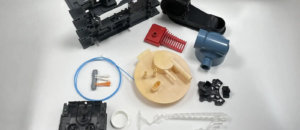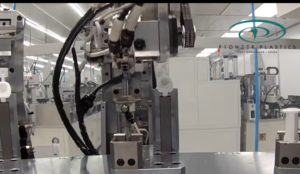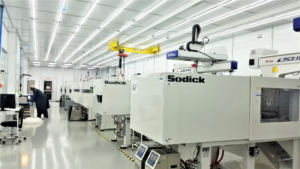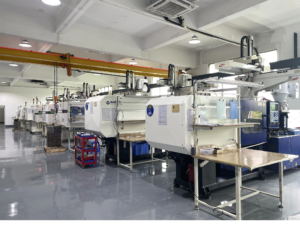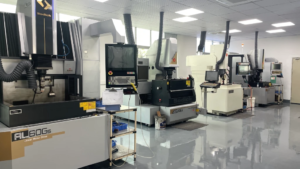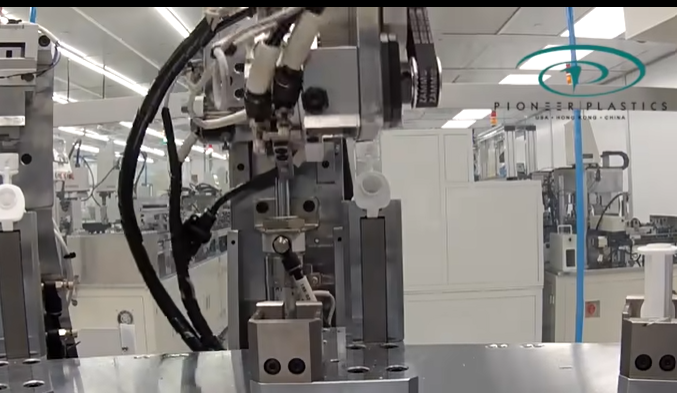
Choosing a molding process affects more than how you produce your component. It can influence material performance, tooling requirements, production efficiency, quality, and long-term manufacturing costs. Let your application guide that decision from the start. Compression Molding Services may suit certain thermoset applications, while injection molding can provide different advantages for other components.
What Should You Consider Before Choosing a Process?
Begin with the purpose of the component. The operating environment, geometry, material, production quantity, and desired performance characteristics should determine which manufacturing process you choose.
Production volume is another key aspect. A process that works well for limited production will not necessarily be advantageous for mass production. Before deciding on a manufacturing process, consider the following factors:
- Material properties
- Part geometry
- Tolerances required
- Production volume
- Tooling requirements
- Operating conditions
- Surface requirements
- Secondary operations
Understand Compression Molding
Compression molding services shape material using pressure and heat within a mold. It can be especially helpful for certain thermoset materials and component designs. You fill the material into the mold, then apply pressure and heat to shape and cure the component.
Your component design is still very important. Its geometry, material properties, tolerances, and production needs may affect the tooling approach. You must therefore consider compression molding as part of your overall product development process. Do not choose it only because of equipment capability.
Thermoset Injection Molding vs Thermoplastic Processing
Material behavior is one of the biggest differences between molding operations. Thermoset materials cure irreversibly, whereas thermoplastics are reversible and can be remelted. If you are investigating Thermoset Injection Molding in Illinois, you must consider whether thermoset properties suit your component’s needs. Thermoset materials can offer favorable properties for tough industrial applications.
Thermoplastics also have other advantages. Thermoplastic injection molding enables large-scale production and a wide variety of components. Choose based on the application’s needs, not on a preference for the molding process.
When Can Thermosets Make Sense?
Thermosets may be appropriate if your component needs specific functional properties such as heat resistance, electrical properties, dimensional stability, and/or chemical resistance, depending on the resin you use. Assess the real conditions first before choosing the material. Consider temperature, mechanical stress, chemicals, electrical conditions, and lifetime.
Thermoset Injection Molding in Illinois may be relevant if your project requires thermoset molding services in this location. Your assessment should consider not only the material but also the manufacturer’s experience with this type of molding.
When Can Thermoplastics Be More Suitable?
Thermoplastics offer flexibility in many applications. Many resin types offer different balances of strength, aesthetics, chemical resistance, and temperature capabilities. Thermoset Injection Molding also allows for high-volume production. An automated process and a repeatable cycle can allow for consistent molding if the tooling and process are set up properly.
However, keep material behavior in mind. Various thermoplastics may exhibit different shrinkage, flow, temperature, and dimensional properties. Choose the correct resin that will fit both your product requirements and process.
What Role Does Tooling Play in Your Decision?
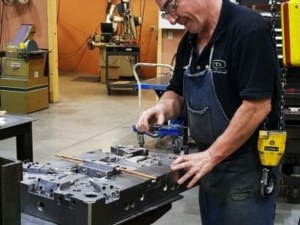
Tooling links your component design to the molding process you choose. The mold must account for material behavior, part shape, production volume, and quality demands. Compression and injection molding can require different tooling systems. Your expected production quantity can also affect tooling. Consider the tool life you need before you decide. A tool for continuous production may require a higher level of investment than a tool for small production runs. Maintenance is important too.
Consider Your Production Volume
Production volume might affect the economics behind your molding plan. If you have high-volume programs, you might invest more in tooling, as long as the projected demand justifies it. Low-volume programs may require a different approach. Analyze your tooling costs against your projected production and product life cycle. For thermoset parts, Compression Molding Services may offer another option if you meet their criteria. Choose a manufacturing process that suits you best.
How Can You Build a More Efficient Manufacturing Strategy?
A manufacturing strategy incorporates material selection, engineering, tooling, and production planning. Separating these elements of the manufacturing process can create difficulties later. First, identify the requirements for the component you need to manufacture. Next, determine the materials and processes that would help you to meet these requirements.
For example, if you plan to use Thermoset Injection Molding in Illinois, consider not only the available equipment but also the company’s technical skills. Also, ask how the company handles design reviews, tooling modifications, quality control, and other issues.
Look Beyond the Molding Process
Molding is not necessarily the last manufacturing process your part needs. You might need to deflash, finish, assemble, inspect, or perform some other secondary operation on your part. This consideration may impact your supplier choice. In some cases, integrated capabilities can make communication easier and reduce the number of manufacturing steps. You must take into account potential changes to your product in the future as well. A supplier with various molding options can provide greater flexibility as your products expand.
Choose the Process That Fits Your Application
Each processing method offers specific advantages based on your material, geometry, quantity, and other requirements. Thermoplastic injection molding can be a good solution for some high-volume applications, while thermoset injection molding can be a good solution for some performance-driven components. Your application should tell you how to proceed.
No single solution works for everyone when comparing compression molding, thermoset injection, and thermoplastic processing. With more than forty years of industry experience, Pioneer Plastics offers thermoplastic and thermoset injection molding, compression molding, tooling, engineering, and assembly services.