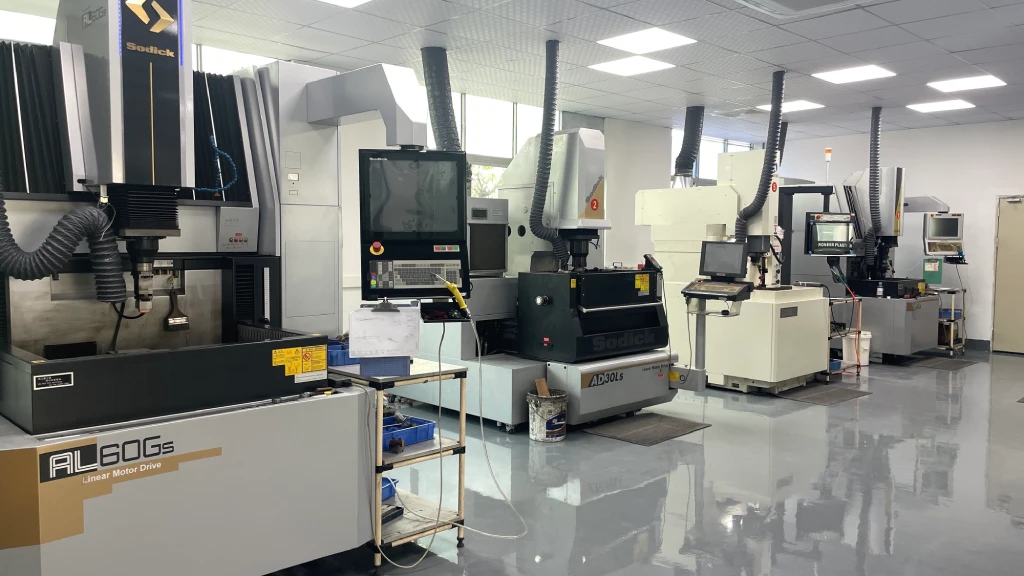
Every successful plastic part has a history that dates back even before the manufacturing process kicks off. While the final part usually takes the spotlight, the decisions made during pre-production are what most influence its performance. Making good decisions at this stage will save you a lot of trouble down the line.
One decision that requires careful consideration is how to develop your Injection Mold Tooling. Proper injection molding tooling ensures smooth manufacturing and delivers high precision for your plastic parts. Understanding this process enables you to make better decisions before reaching the manufacturing phase.
Why Tooling Deserves More Attention
Injection molding is often perceived to be all about the molding machine. The truth is, it is the mold that is responsible for the precision and repeatable nature of each part. Good mold design will help you:
- Create products of uniform sizes
- Reduce material wastage
- Minimize defects during production
- Increase cycle efficiency
- Guarantee reliable production in the long run
The quality of the tooling will dictate the predictability of your manufacturing process.
What Shapes a High-Quality Mold?
Developing a mold is an engineering task as well as a manufacturing solution. Every decision made during the process will affect the final piece’s performance. Important factors are:
- Part shape
- Resin type
- Cooling mechanism
- Gate placement
- Venting scheme
- Production quantity expected
If all these factors work together, manufacturers can produce better-quality parts without unnecessary production problems.
Can Better Tooling Save Money?
Of course, and in many cases, this is not obvious. Whereas tooling may be seen as an initial investment, poor tooling will generally cost you more in the long run through repairs, inconsistent parts, production delays, and material waste. By making the right investments in Tooling for Injection Moulding, you will be able to:
- Reduce scrap
- Increase efficiency
- Minimize maintenance
- Increase mold life
- Deliver consistent results
In many cases, looking beyond the price of your tooling can pay off in the end.
Design Before You Build
Successful manufacturing requires proper planning before taking action rather than solving issues after they occur. Engineers review the product’s design before manufacturing to identify ways to enhance manufacturability without altering its function.
Mold Design and Manufacturing usually involve assessing:
- Wall thickness
- Draft angles
- Material flow
- Cooling ability
- Shrinkage ratios
- Assemble ability
Such assessments reduce manufacturing risks and facilitate an easy transition into the manufacturing process.
Is Every Tooling Project the Same?
Each product has its own challenge. The enclosure for a medical device, an industrial housing, or any other consumer product needs a tooling method that accounts for its functionality, complexity, and anticipated production volume. What works for one product may not necessarily work for another. This is the reason why an experienced manufacturer approaches your project from your point of view.
Think Beyond the First Production Run
Tooling must support your product throughout its lifetime, not just during its initial run. The more products you produce and the more you change your product design, the more important it is to have optimized your tooling to maintain quality and minimize downtime.
Build a Stronger Manufacturing Foundation
The quality of every plastic part starts long before the molten plastic even reaches the mold. Engineering, tooling, and proper planning will all play an integral role in making your manufacturing process more efficient and the final result even better.
Pioneer Plastics has years of experience, providing the engineering, tooling, and manufacturing expertise needed for your specific project.
We have searched forever for a spot that balances excitement with fair play and finally landed here. The promotional calendar keeps things fresh and the support team speaks our language perfectly. It feels like a community that actually cares about its members. betjuegoapuestas