Getting a new plastic part into production involves more than proving the design works. You also need to understand how the part will behave during molding. Early tooling decisions can reveal manufacturing issues before they become expensive production problems.
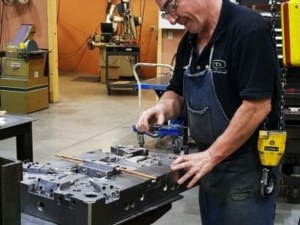
Using Mold Bases for Prototyping gives you a practical way to evaluate your design earlier. It can support faster development, meaningful testing, and better decisions before you invest in final production tooling.
Why Should You Consider a Prototype Mold Base?
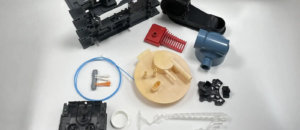
The prototype must answer key product questions. It must help you assess the product’s dimensions, fit, function, material performance, and manufacturing considerations in real conditions. For this purpose, a reusable or properly equipped mold base is quite suitable. Rather than treating prototyping as an entirely separate task, you can prepare for manufacturing through prototyping.
This approach may be especially beneficial if your product has difficult features. Physical parts will reveal problems that are unlikely to become clear during computer modeling. Prototype molding will allow you to check:
- Dimensions and tolerances
- Fit and assembly of the parts
- Surface finish
- Material performance
- Functional considerations
- Possible molding problems
- Design modifications before production
The information you gain can make later tooling decisions more informed. It can also reduce the risk of discovering fundamental problems after production tooling is complete.
Connect Prototyping With Your Final Design
Your prototype should contain data on your future part. This means you should keep the finished part in mind when planning your prototype. Features like wall thickness, draft, ribs, bosses, and transitions can affect the molding process. By checking these features early, you can change anything before costs escalate.
At this stage, you can get physical proof from Prototype Plastic Injection Molding. You can check whether the part will work as designed and make changes as needed. You can also check the part’s manufacturability.
Match the Tooling to Your Development Stage
But not every project needs tooling right away. The right choice depends on the product’s current stage. If you need to develop quickly, use a rapid prototyping tool. Sometimes, you need extra validation before producing tooling. Also consider future production quantities. A tool used only for evaluation will have different requirements than a tool used during production.
How Can Rapid Prototyping Services Improve Development?
Rapid Prototyping Services can help you move from digital design to physical validation faster than you might expect. Instead of waiting for final tooling, you can test critical product decisions sooner. This is because rapid prototyping’s key benefit is quick learning. If your prototype reveals a design flaw, you will have time to fix it while development is still flexible.
Prototypes also improve communication with engineering, manufacturing, quality control, and other teams involved in the process. A physical part may help you better understand design problems. With rapid prototyping and smart tooling decisions, you can ensure a clear path to production. Each step in the development process can offer clues for the next.
Test More Than Appearance
A prototype cannot merely resemble the final part. You must identify the qualities that need physical validation. In certain cases, dimensional tolerance could be the main requirement. Others may require functionality tests, assembly tests, strength assessments, or interaction with surrounding parts.
Prototype Plastic Injection Molding lets you assess these qualities through a molded part. This process can give you more tangible data than relying solely on computer analysis. You can then apply your observations to your design. The goal is to learn what works and what doesn’t.
Consider Material Selection Early
The materials you choose will also affect the molding process itself. Different resin compounds behave differently during filling, cooling, and hardening. During prototyping, use materials that match the eventual manufacturing process when possible. Using an appropriate material in testing will provide more relevant data about the final product.
These material properties may affect shrinkage, dimensional stability, finish, and performance. These factors will affect your tooling decisions.
Use Prototype Results to Guide Tooling
A good prototype is not the end of your development process; it provides data you can use to improve the next step. Take a close look at the outcome of your test phase and find out what changes in design, tooling, materials, and production requirements have become apparent.
You can bring this data into your production tooling phase for a more integrated development process, rather than running two separate processes: prototyping and manufacturing. Mold Bases for Prototyping can help by providing a solid basis for early tooling and part evaluations.
What Should You Consider Before Moving to Production?
Before committing to tooling, review your prototype to see whether you have answered the most essential questions. You need answers to questions about the part’s functionality, manufacturing, and critical parameters. You may decide that the design needs further testing and development.
Take a closer look at expected production volumes and future demand. These factors affect cavity count, tool construction, servicing, and initial investment. A prototype lets you make these decisions with more information. Thus, Rapid Prototyping Services can help reduce risks in product development.
Plan for a Smoother Production Transition
Production and prototype tooling should share the same manufacturing goal. The information collected while creating prototypes should guide the next steps toward tooling and process optimization. This helps you avoid repeating the same mistakes and improves communication between design and manufacturing.
With Prototype Plastic Injection Molding, you can assess the physical part before full production. This allows you to adjust your project when changes are still relatively easy to implement.
Turn Early Testing Into Production Confidence
Prototype creation gives you a chance to learn before making major production investments. The right tooling methodology lets you test the design, assess manufacturing risks, and move to the next step.
With decades of manufacturing experience, Pioneer Plastics supports product development through engineering, tooling, rapid prototyping, and injection molding capabilities. Its integrated approach connects early product validation with practical manufacturing requirements.